tag:washingtonoffice.nd.edu,2005:/news-events/newstag:washingtonoffice.nd.edu,2005:/latestWashington Office | News2026-07-28T14:29:00-04:00The Washington Office represents the University of Notre Dame in the nation’s capital, enhancing the national and international visibility of our community’s vision, mission and priorities.tag:washingtonoffice.nd.edu,2005:News/1833842026-07-28T14:29:00-04:002026-07-28T14:29:27-04:00DC Bridge Builders: Maria Rossi ’20 on connecting ideas and people at the Keough School’s Washington Office
As Senior Operations and Outreach Coordinator at the Keough School of Global Affairs Washington Office, Maria Rossi ’20 works at the intersection of academia and public policy, helping translate Keough faculty expertise into real-world impact.
She supports visiting faculty and students, helps drive programs that extend the Keough School’s reach in DC, and coordinates engagement for students and the school’s growing network of Washington-based alumni.
“Bridge-building is front and center in my work at Keough,” Maria says. “The purpose of our office is to be a bridge between the Keough School in South Bend and Washington, DC. A lot of the work I support involves using Keough faculty research to inform policy – connecting academia and the policymaking world.”
While academics and policymakers might speak different languages, Maria sees shared values at their core.
“We talk about the policy world as though it’s some sort of other planet,” she says, “but both policymakers and academics are very mission-driven. They’re wonks with tons of knowledge and a deep interest in using it to make the world a better place. Looking for those similarities provides a lot of common ground to work with.”
A Global Perspective on Connection
Maria gained her bridge-building skills through international experiences, including studying abroad in Morocco, teaching in Guatemala, and serving as a Fulbright English teaching assistant in Luxembourg.
“Having lived in other countries, some very different from the United States, I can say it's absolutely important and helpful to be aware of cultural differences,” she says. “However, it’s equally important to avoid falling into the trap of overestimating the impact of cultural differences, or neglecting to consider cultural similarities.”
For example, while in Morocco, Maria initially worried her Catholic background might create a barrier in a predominantly Muslim country. Instead, she found shared ground.
“My host family often treated our faith practices as something we had in common,” she said. “My host mom would talk about me going to ‘prayers’ on Sunday at the Catholic church the same way she talked about her own family going to the mosque every Friday. Our differences became a bridge, not a barrier.”
Notre Dame’s Role in Cultivating Bridge-Builders
For Maria, institutions like Notre Dame play a vital role in fostering bridge-builders by providing opportunities to study alongside peers with diverse perspectives–experiences that continue to shape her work in Washington, DC.
“Notre Dame gave me opportunities to meet, study beside, and work with people I might not otherwise have had reason to,” she reflects. “That helped me develop my own skills in relating to people from backgrounds, cultures, and ideologies different from my own.”
About The Series:
Inspired by University President Rev. Robert Dowd, C.S.C.,'s call for Notre Dame to be a community of bridge builders, DC Bridge Builders spotlights members of the Notre Dame community who are fostering collaboration and common purpose in our nation’s capital.
]]>
Irene Leveringtag:washingtonoffice.nd.edu,2005:News/1833282026-07-28T14:19:00-04:002026-07-28T14:35:59-04:00DC Bridge Builders: Maggie Kmetz MGA ’22 on connecting Notre Dame alumni in Washington
As president of the Notre Dame Club of Washington, DC, Maggie Kmetz MGA ’22 leads one of the University’s largest alumni communities, helping Notre Dame graduates in the region find connection, friendship, and opportunities to serve.
The club is entirely volunteer-run and supports more than 16,000 constituents and 6,000 alumni across the Washington area. Through regular programming, it creates a space for alumni to stay engaged long after graduation. In April, the club was recognized as one of Notre Dame’s best alumni clubs in the country, winning the 2025 Outstanding Club of the Year award for its club size.
Rooted in the Notre Dame Family
Surrounded by the Notre Dame family since childhood, Maggie witnessed the strength of the Irish network early on.
“Notre Dame was integral to my childhood,” she recalls. “My grandfather attended law school, my uncle was a history major and later a lawyer, and my parents met in the Notre Dame marching band.”
Maggie earned her Master of Global Affairs from the Keough School of Global Affairs in 2022, following two years as a Peace Corps Youth Development Volunteer in Morocco. Today, she works in the federal government.
“My professors and classmates in graduate school shaped my whole experience and I am so lucky to call DC home with friends that I met at Notre Dame,” she says. “That gift keeps giving as I’ve grown closer with alumni that I met at the club.”
Connecting and Serving in DC
"It always amazes me how many Notre Dame alumni reside in our area. It’s not uncommon to see a Notre Dame baseball cap or sweatshirt on the Metro and offer a ‘Go Irish!’ on the way off the train.”
In a fast-paced city, Maggie views the alumni club as a steady anchor.
“Connecting with each other is more important now than ever,” she says. “We have so many distractions in our lives, but there is so much to learn about ourselves and those we are in community with. Finding a way to foster human connection is at the core of my efforts to build bridges in Washington, DC.”
In 2025 alone, the club hosted 162 events, including game watches, volunteer outings, and social gatherings. The goal is simple: help alumni who live near each other actually get to know each other.
“It always amazes me how many Notre Dame alumni reside in our area,” Maggie says. “It’s not uncommon to see a Notre Dame baseball cap or sweatshirt on the Metro and offer a ‘Go Irish!’ on the way off the train.”
Living Notre Dame’s Bridge-Building Mission
For Maggie, bridge-building extends well beyond alumni circles. It also means showing up for the city, partnering with other universities and local organizations to host service opportunities, including toy drives and serving at local soup kitchens.
Maggie sees her work with the club as a natural extension of Notre Dame’s mission.
“Notre Dame exposes students to the world,” she reflects. “Notre Dame teaches us to open our arms to all and extend our reach to all. Exposure to different people, places, and cultures is essential for bridge builders.”
About The Series:
Inspired by University President Rev. Robert Dowd, C.S.C.,'s call for Notre Dame to be a community of bridge builders, DC Bridge Builders spotlights members of the Notre Dame community who are fostering collaboration and common purpose in our nation’s capital.
]]>
Irene Leveringtag:washingtonoffice.nd.edu,2005:News/1821232026-06-05T10:23:00-04:002026-06-05T10:23:07-04:00Notre Dame president shares message of hope and action at Capitol Hill Mass celebrating faith and service
Notre Dame President Rev. Robert A. Dowd, C.S.C., encouraged alumni, students, and public servants to turn Christian hope into action during a Notre Dame Mass at St. Peter’s Church on Capitol Hill earlier this year.
Fr. Bob delivers a homily emphasizing the Christian call to change as part of a Notre Dame Mass at St. Peter's on Capitol Hill.
Hosted by the Notre Dame Washington Office, the Mass brought together alumni and friends serving in Congress, government, and across Washington, DC, along with current students from the Notre Dame Washington Program. Now in its second year, the Mass offered a moment to pause and reflect as a Notre Dame family during the Lenten season. Last year’s inaugural Mass was held at St. Joseph’s on Capitol Hill.
Fr. Dowd’s homily referenced this year’s Notre Dame Forum theme, “Cultivating Hope,” emphasizing that hope only makes sense if we believe that change for the better is possible–in ourselves, in our communities, in our country, and in the wider world.
More than 100 members of the Notre Dame family in Washington gathered for Mass.
Reflecting on the Lenten invitation to change, he encouraged attendees to act on their capacity for transformation and service. Citing his own experience taking the Myers-Briggs personality test while in seminary, Fr. Dowd cautioned against using such tools as excuses to resist growth.
"We are called to let God change us in ways that we need to change,” he said. “We are called to let God bring out the best in us, to re-order our hearts in ways that help us to focus on those things that matter the most—in short, to be the people of integrity, justice, courage, and compassion God has created us to be."
Fr. Bob met with Washington Program students following Mass.
Quoting Saint Teresa of Calcutta, he reminded the Notre Dame community: “I used to believe that prayer changes things, but now I know that prayer changes us and we change things.”
“As we continue this Lenten journey,” he concluded, “let us open our hearts and let God change us in the ways we need to change, and let us continue to do our best to work with others to bring about changes that make our country and our world more humane, just, and peaceful.”
Through events like this Mass, the Notre Dame Washington Office strengthens connections among students, alumni, and decision-makers in DC, linking faith, scholarship, and public service to action rooted in hope.
Fr. Bob poses for a photo with Steve McCarthy, a volunteer leader with the Notre Dame Club of Washington, DC, after Mass.
]]>
Irene Leveringtag:washingtonoffice.nd.edu,2005:News/1821592026-06-05T10:21:00-04:002026-06-05T10:21:17-04:00Notre Dame students explore policy, advocacy, and public service in Washington, DC
More than 50 University of Notre Dame students traveled to Washington, DC, this spring for immersive experiences in policy, advocacy, research, and career development.
Students attended an Irish Coffee networking social held at the Notre Dame Washington Office.
Students came from across the University, including the Keough School of Global Affairs, Notre Dame Law School, the College of Arts & Letters and the Department of Economics, the John J. Reilly Center for Science, Technology, and Values, and student organizations such as Student Policy Network and Notre Dame College Democrats.
Supported by the Notre Dame Washington Office, the students connected with policymakers, federal agencies, think tanks, advocacy organizations, and Notre Dame alumni working across the capital. Together, these experiences offered firsthand insight into policymaking while helping students clarify their academic and professional paths.
Exploring Global Affairs and Economic Policy
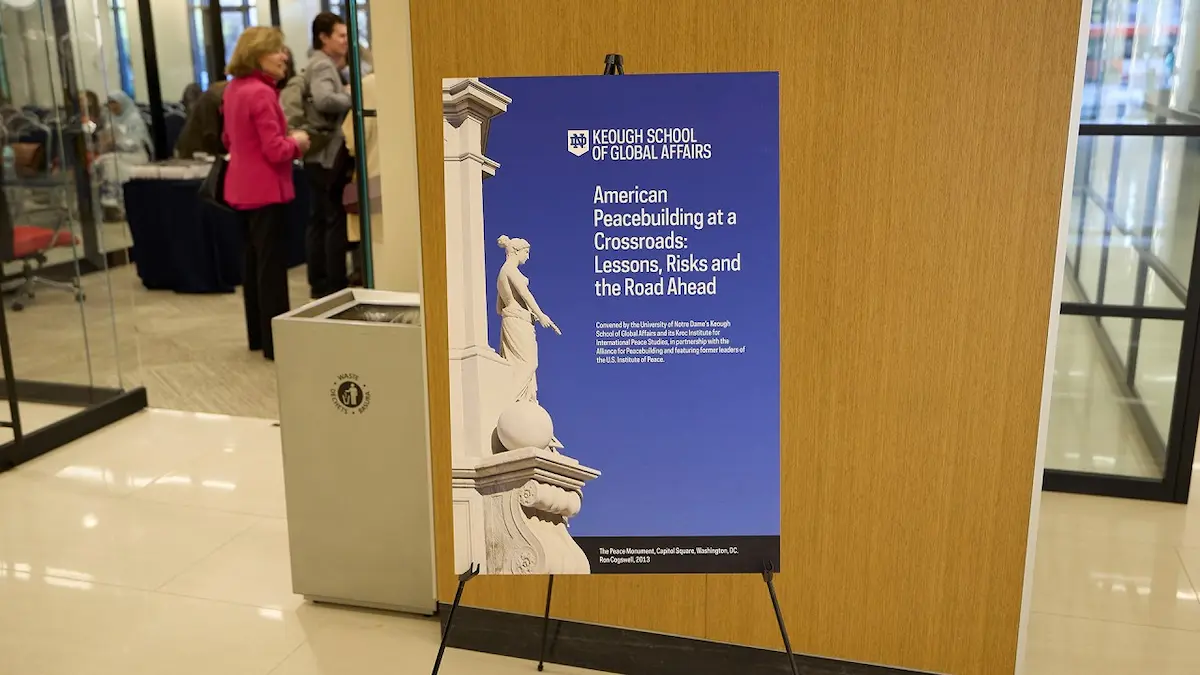
Thirteen students in the Keough School of Global Affairs’ Master of Global Affairs program explored international development and diplomacy through meetings with organizations including the Center for Strategic and International Studies (CSIS), the World Bank Group, and the U.S. Department of State. Several also attended the Keough School’s March conference on American peacebuilding, which convened scholars and leaders to explore how U.S. peacebuilding expertise must evolve to meet emerging global and national challenges.
Students enrolled in the Keough School of Global Affairs’ MGA program spent spring break in DC exploring international development and diplomacy careers.
“It was an enriching experience that I would definitely do again,” one MGA student shared as feedback on the visit. “I met people I never imagined I would meet—individuals who are incredibly valuable to the professional career path I aim to pursue.”
Ten students in the Department of Economics’ Evidence-Based Poverty Alleviation concentration examined how research informs federal policy. During visits to the Federal Reserve Board, the Bureau of Labor Statistics, the Aspen Economic Strategy Group, the Brookings Institution, and the American Enterprise Institute, students explored how data and evidence shape economic decision-making. A Supreme Court tour, led by Notre Dame Law School alumni clerking for the Court, added a legal dimension to their experience.
Economics students in the Evidence-Based Poverty Alleviation concentration met with policymakers as part of their visit, including Sen. Todd Young (IN).
“What most excited me [about the trip] was being able to put what I have learned in my time at Notre Dame into practice,” junior Juliana Molina Giha shared. “I was able to visit the think tanks I’ve been learning about in my global affairs classes, while also learning more about how economics is put into practice by policymakers across the government.”
Connecting Science and Policy on Capitol Hill
Eight students studying science policy through the John J. Reilly Center for Science, Technology, and Values joined the economics students for a visit to Capitol Hill, where they heard from a bipartisan panel of Notre Dame alumni working in Congress and gained insight into careers on Capitol Hill. The groups also participated in an Irish Coffee alumni networking social hosted at the Washington Office, connecting directly with Notre Dame professionals in the region.
Advocacy and Public Service in Practice
Later in the semester, twenty students from the University’s College Democrats chapter visited Washington for a professional development experience focused on careers in public policy and advocacy. Their visit included an immigration policy panel at the Washington Office featuring experts from the Presidents’ Alliance and UnidosUS, a Capitol tour, a bipartisan Hill staff panel with Notre Dame alumni, and individual meetings with Democratic and Republican Hill staff. Students also connected with alumni and professionals through a networking social hosted by the Notre Dame Club of Washington, DC.
Students in Notre Dame’s College Democrats chapter visited the Notre Dame Washington Office for an immigration policy panel featuring experts from the Presidents’ Alliance and UnidosUS.
“It was so rewarding to be exposed to various government and public policy career paths through this trip,” sophomore Natalie Swiderski said. “I came away with a much greater appreciation for all the work being done on Capitol Hill.”
Hannah Huston, a graduating senior and the 2025-26 co-president of College Democrats, agreed, emphasizing the trip’s importance for career discernment. “The DC trip was one of my most formative experiences at Notre Dame, whether it was networking with alumni or meeting like-minded individuals. It introduced me to what a life in public service after graduation could look like.”
Several students also visited the nation’s capital to represent the University during formal advocacy days on Capitol Hill.
Two College of Arts & Letters students participated in the National Humanities Alliance Annual Meeting and Humanities Advocacy Day, where they met with staff from Indiana’s congressional delegation. They shared how their humanities studies at Notre Dame have shaped their academic interests and career paths.
Separately, Notre Dame Law School student and highly decorated U.S. Air Force veteran Tyler Beamish participated in Student Veterans of America’s (SVA) Washington Week 2026, advocating for student veterans in higher education. He met with Indiana congressional leadership to discuss the needs of veterans navigating college and post-service transition.
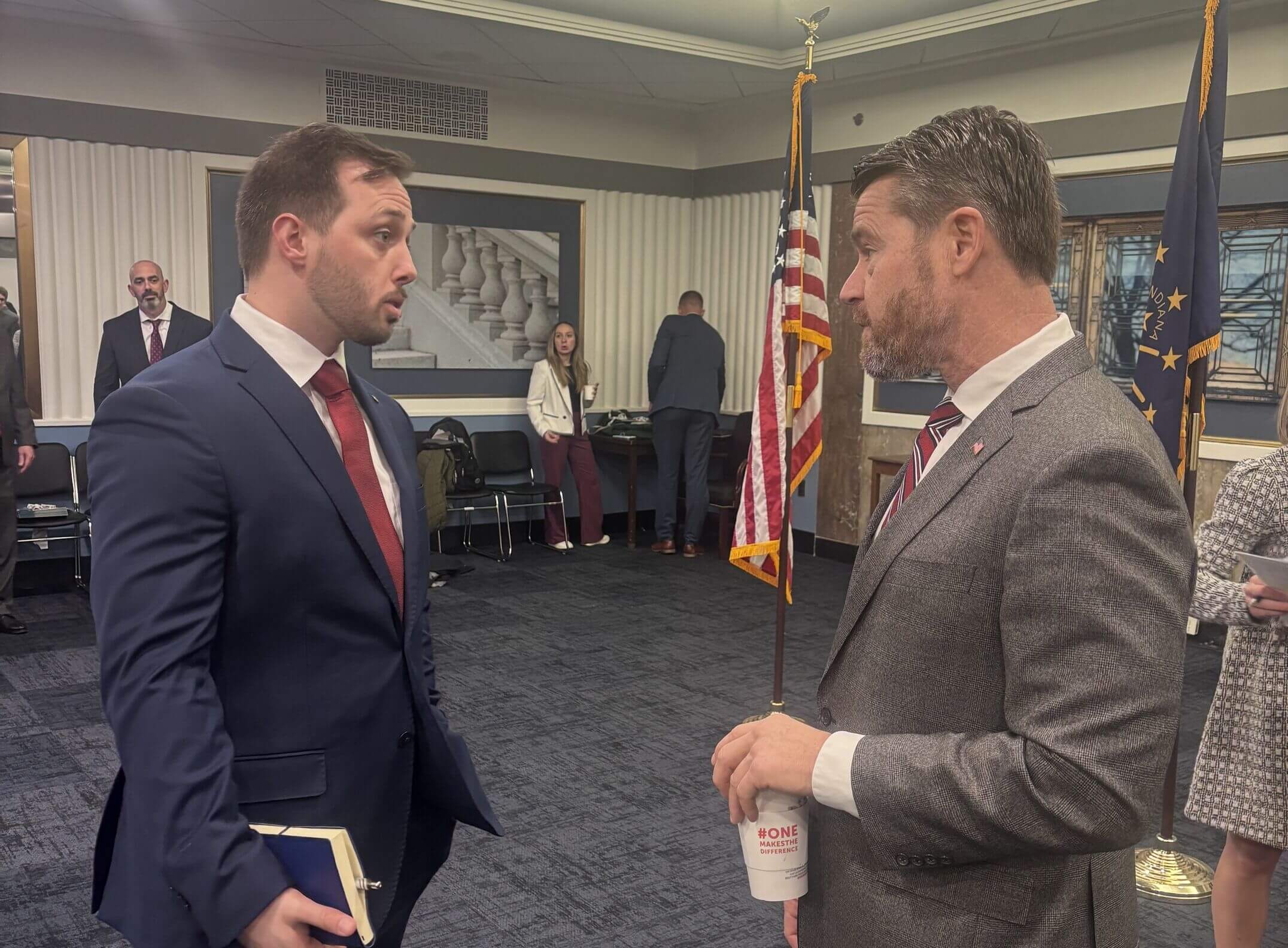
Notre Dame Law School student and Air Force veteran Tyler Beamish advocated for student veterans during Student Veterans of America’s Washington Week, meeting with Rep. Rudy Yakym (IN-02), Sen. Todd Young (IN) and others.
“As a law student learning about the structure and function of our government and how to analyze complex policy questions, this trip really demonstrated how the things I’m studying work in practice,” Beamish said. "It was an incredible experience, and I would strongly encourage any veteran who has the opportunity to attend Washington Week to take advantage of it."
Student Research Meets Policymaking
Most recently, several students had the opportunity to present original research to policymakers in DC. Eight members of the Student Policy Network (SPN) – a student-led initiative that provides undergraduates with opportunities to pursue policy-relevant research – presented projects on topics including affordable housing, labor rights, and environmental policy at an Irish Coffee alumni networking social hosted by the Washington Office, featuring special guest Notre Dame parent Rep. Tim Kennedy (NY-26). Students also shared their work in meetings with staff on Capitol Hill and at think tanks.
Student Policy Network students presented research at an Irish Coffee alumni networking social held at the Notre Dame Washington Office.
“SPN has always been about supplying students with the hands-on, practical policy experience that they can’t get in the classroom,” said junior and incoming SPN co-president Jack Newell. “From meetings on the Hill to the symposium at the Notre Dame Washington Office, nothing embodied that mission more clearly than this semester’s visit to DC.”
Across these spring visits, Notre Dame students engaged Washington in wide-ranging and meaningful ways, connecting with the institutions, leaders, and alumni shaping policy and public life in Washington. Taken together, their experiences reflect Notre Dame’s commitment to preparing students not only for academic success, but for lives of service, leadership, and impact in the public good.
]]>
Irene Leveringtag:washingtonoffice.nd.edu,2005:News/1828732026-06-04T14:20:00-04:002026-07-06T14:20:23-04:00Rice-fish farming may help curb schistosomiasis while increasing food production
The chronic disease schistosomiasis wreaks havoc on more than 220 million people around the world, with the vast majority of cases being in sub-Saharan Africa.
Professor Jason Rohr in his lab at Galvin Life Science Center. (Photo by Barbara Johnston/University of Notre Dame)
Despite decades of mass drug administration campaigns, schistosomiasis remains one of the world’s most widespread neglected tropical diseases. Rice farmers and their families are particularly at risk, as the parasitic worms that cause the disease are spread by freshwater snails found in the standing water of rice fields.
New research published in Nature Sustainability has explored how rice-fish coculturing — an intervention technique that introduces fish into the rice fields — could help reduce disease incidence and poverty along the northern Senegal River basin, a hot spot for schistosomiasis.
“One of the most exciting aspects of this research is that it suggests we don’t always have to choose between improving human health, increasing food production and protecting the environment. By restoring native fish to rice fields, we may be able to reduce disease transmission while helping farmers produce more food and generate additional income. Those kinds of win-win-win solutions are rare, but they are exactly what sustainable development requires,” said Jason Rohr, Ludmilla F., Stephen J. and Robert T. Galla College Professor of Biological Sciences at the University of Notre Dame and corresponding author of the study.
Researchers used data from more than 400 households in rural Senegal and found that the children of rice farmers had higher prevalence of the disease than children of non-farmers, indicating the increased risk of contracting the disease that rice farmers and their families face. And while there is a drug that can treat the disease, it cannot prevent reinfections, which will continuously occur and contribute to a cycle of poverty and disease.
To reduce disease transmission, the research team led by Rohr introduced African Bonytongue and Nile tilapia into rice fields, two native fish species that naturally suppress snail populations by eating snails or competing with them for resources. Through two trials, the team found that although the fish were not actively fed, both species thrived.
Emily Selland samples for snails in the fish refuge trench of a rice field in Senegal. (Photo Credit: Paula Senff, Centre de coopération internationale en recherche agronomique pour le développement (CIRAD))
The researchers found that fields containing both fish species had fewer of the snails that host the parasite that causes the dominant form of schistosomiasis in the region. Fewer snails could reduce the risk of infection faced by rice farmers and their families.
But benefits of the intervention reached beyond disease transmission. The research team also found the intervention increased rice yields by more than 25 percent and improved the soil nutrients of the rice fields, all while offering a potential secondary source of income through the sale of harvested fish.
“What is most meaningful to me about this work is that we’re taking an agricultural technique used in other regions and expanding it to infectious disease transmission,” said Emily Selland, lead author of the study and graduate student in the Rohr Lab at Notre Dame. “We can tackle schistosomiasis and also support the development of these communities by designing a sustainable and multidisciplinary solution.”
Researchers believe the initial findings are encouraging, and additional work is already underway.
“The next step is determining how this approach can be scaled across schistosomiasis-endemic rice-growing regions. If these results hold, rice-fish coculturing could become a model for addressing health, food security and poverty simultaneously,” said Rohr, an affiliate of Notre Dame’s Eck Institute for Global Health and Environmental Change Initiative.
In addition to Rohr and Selland, other study coauthors include Alexandra Sack formerly from Notre Dame; Nicolas Jouanard, Amadou Guisse, Momy Seck and Louis Dossou Magblenou from Station D'innovation Aquacole; Andrea J. Lund and Giulio A. De Leo from Stanford University; David López-Carr from University of California, Santa Barbara; and Molly J. Doruska and Christopher B. Barrett from Cornell University.
The study was funded by the National Science Foundation, the Notre Dame Poverty Initiative and the Stanford Sustainability Accelerator in the Biology for Sustainability program.
Contact: Brandi Wampler, associate director of media relations, 574-631-2632, brandiwampler@nd.edu
Originally published by Brandi Wampler at news.nd.edu on June 04, 2026.
]]>
Brandi Wamplertag:washingtonoffice.nd.edu,2005:News/1819442026-05-18T10:00:00-04:002026-05-21T08:09:43-04:00The commencement of the Class of 2026Graduates sing the Alma Mater at the University of Notre Dame 2026 Commencement ceremony at Notre Dame Stadium. (Photo by Matt Cashore/University of Notre Dame)
The University of Notre Dame celebrated its 181st Commencement Ceremony on Sunday (May 17) at Notre Dame Stadium. An audience of more than 20,000 family members, friends, faculty and graduates were in attendance as 2,120 degrees were conferred on undergraduate students.
Over the course of Commencement Weekend, the University conferred a total of 3,335 degrees.
University of Notre Dame President Rev. Robert A. Dowd, C.S.C.. speaks at the University of Notre Dame 2026 Commencement Ceremony at Notre Dame Stadium. (Photo by Matt Cashore/University of Notre Dame)
University President Rev. Robert A. Dowd, C.S.C., and John McGreevy, the Charles and Jill Fischer Provost, introduced the speakers and welcomed the guests. The ceremony opened with the singing of “America the Beautiful,” led by Rev. Kevin Grove, C.S.C., an associate professor of theology.
Salutatorian Allison Elshoff, a business analytics major from Valencia, California, offered an invocation. On behalf of the graduating class, she expressed gratitude for Christ’s love, for family and friends, for teachers and mentors, and for the University of Notre Dame. Elshoff also prayed for God’s guidance and asked that the graduates “leave these halls eager to enter the world as instruments of your peace.”
In his valedictory address, Martin Soros, from Bethesda, Maryland, considered the journey that each graduate took to Notre Dame, which he noted was not so different from that of its founder, Rev. Edward Sorin, C.S.C., who arrived on the frozen grounds in late November 1842 with a vision for what the University could become.
“We all came to create something, just like Father Sorin,” he said. “What did he see in that frozen landscape? He saw you and he saw me. He saw researchers fighting to end disease. He saw students tutoring at a local middle school. He saw members of a choir sharing their gifts, and he saw neighbors cracking jokes in a dorm hallway. Over these last four years, at every turn, we cultivated warmth for others.”
Soros, a civil engineering major who is perhaps best known as co-creator of St. Olaf’s ice chapel on campus this winter, said that warmth is something the world desperately needs.
“Like Father Sorin, we stand before a world that has grown cold,” Soros said. “And though the people we encounter may know nothing about Notre Dame, we can leave its mark on their hearts with the warmth we have cultivated here. This may seem daunting. But we’ve been doing it for four years, and we are just getting started.”
Honorary degrees were conferred upon Marguerite Barankitse, a humanitarian leader, teacher and founder of the education, development and relief organization Maison Shalom (House of Peace); Mary Boyce, provost emerita and professor of mechanical engineering at Columbia University; Eamon Duffy, emeritus professor of the history of Christianity at the University of Cambridge and former president and fellow of Magdalene College at Cambridge; Christopher J. Murphy III, executive chairman of 1st Source Corporation; J. Christopher Reyes, co-founder and chair of Reyes Holdings LLC; and Cardinal Joseph W. Tobin, C.Ss.R., the sixth archbishop of Newark.
Sister Raffaella Petrini, F.S.E., gives the commencement address at the University of Notre Dame 2026 Commencement Ceremony at Notre Dame Stadium. (Photo by Matt Cashore/University of Notre Dame)
Father Dowd then introduced the principal speaker, Sister Raffaella Petrini, F.S.E., who also received an honorary degree. Sister Petrini is president of the Pontifical Commission and Governorate of Vatican City State, serving at the invitation of both the late Pope Francis and Pope Leo XIV, and becoming the first woman to hold these positions.
“Sister Petrini speaks to us today at a historic time in the Church, as we embrace the first American-born pope, Pope Leo. … It is clear that Pope Leo is a pope for all, as he has centered his papacy on unity, charity and ‘crossing borders in order to announce the Gospel,’” Father Dowd said. “In many ways, our speaker today has embodied these ideals throughout her ministry, as an Italian-born member of an American-based religious community who is tireless in her service to the Church and to all of God’s people around the world.”
In her address, Sister Petrini built on the recent Jubilee year theme chosen by Pope Francis, “Pilgrims of Hope,” inviting the graduates to become “leaders of hope.”
“You will be people of hope if, centered in Christ, the Principle of Communion, you embark on your new beginning, driven by a sincere desire to build bridges: bridges between humanity and God; bridges between those you meet; bridges between those who are the main players and those who are left behind; bridges between cultures, languages and personal histories; and bridges between individuals and generations,” she said.
Sister Petrini also called upon the graduates to “dream, make choices and set priorities” and to “continue to search for more.”
“I pray that you will march on and contribute to the common good, that you will move forward strong of heart and remain true to your faith, with kindness and courage,” she said. “May you take responsibility for others with loyalty and integrity, and be our hope.”
University of Notre Dame President Rev. Robert A. Dowd, C.S.C., places the Laetare Medal on Timothy Shriver, chairman of Special Olympics, at the University of Notre Dame 2026 Commencement Ceremony at Notre Dame Stadium. (Photo by Matt Cashore/University of Notre Dame)
The University presented the 2026 Laetare Medal — the most prestigious award given exclusively to American Catholics, and Notre Dame’s highest honor — to Timothy P. Shriver, chairman of Special Olympics.
Shriver, who began his career as an educator, described his decision to lead Special Olympics, which was founded by his mother, Eunice Kennedy Shriver.
Special Olympics, he said, is “a global witness to the truth that every human being is a sacred creation, with inherent dignity, made in the image and likeness of God — and should be treated that way.
“The precious occasions when we gather and see this truth together are moments of lasting grace.”
Shriver, who also co-founded UNITE, a nonprofit organization dedicated to helping people bridge political divides, said that the need to make dignity the standard for how we treat each other is both an ancient call — and “the most urgent call of our times.”
“In answering the call, you here at Notre Dame have an extraordinary advantage,” Shriver said. “You will walk out of here with the advantage of having been schooled here — on this campus, in this special place — and your university was blessed for this calling even before Father Sorin baked the first brick to build Notre Dame.
“So as you leave the home field of the Fighting Irish to launch the next chapter of your lives, what would you fight for? What were you born to fight for? I pray you will fight to honor the inherent dignity in every human being — and renew the face of the earth.”
Following the conferral of all baccalaureate degrees, Father Dowd offered a charge to the graduates.
“Never forget that your charge as a Notre Dame graduate is to be a force for good in the world. And as you go out into the world, to build your careers and communities and deepen your awareness of God’s mysterious presence and action in your lives, I hope you will rely on the moral, intellectual and ethical foundation you’ve cultivated here,” he said. “Class of 2026, as you go forth from here, be assured of our gratitude for you — and be assured of our prayers for you. I hope you will come back to Notre Dame often, because it is and always will be your home.”
The ceremony closed with a benediction by Cardinal Tobin, followed by a special performance by Irish folk band The High Kings.
“Send [these graduates] forth as bearers of light where there is darkness, hope where there is despair, and unity where there is division,” Cardinal Tobin said. “May their lives reflect the values they have learned here — a commitment to truth, a heart for service and a faith that seeks understanding.”
Contact: Carrie Gates, associate director of media relations, c.gates@nd.edu, 574-993-9220
Originally published by Carrie Gates at news.nd.edu on May 17, 2026.
]]>
Carrie Gatestag:washingtonoffice.nd.edu,2005:News/1819462026-05-18T08:11:00-04:002026-05-21T08:11:36-04:00Research, fellowship, and faith abound at the Notre Dame-Ukrainian Catholic University Impact Forum
Where can hope be found in wartime? In small victories, certainly. But also in the belief of something bigger, in the hope that peace will prevail. Institutions like the University of Notre Dame and Ukrainian Catholic University would call that faith.
For 22 years, Notre Dame has sustained a partnership with Ukrainian Catholic University (UCU), rooted in a shared Catholic identity. That partnership expanded in 2022 after the full-scale Russian invasion of Ukraine, when Notre Dame added new programs and funding for research grants. Sixteen grants, funded by Notre Dame Global and Notre Dame Research, have been awarded since 2022 to ND and UCU faculty to pursue joint research on concerns central to Ukraine.
Additionally, in 2023, the Nanovic Institute launched the Ukrainian Studies Hub—a University-wide initiative that brings together scholars and students focused on Ukraine. The Hub leads education and research initiatives and serves as a platform for building partnerships in Ukraine and responding to the critical challenges facing Ukrainians and the global community. It brings to life Notre Dame’s work as a founding member of the Global Coalition of Ukrainian Studies, and, in partnership with UCU, also hosts a biennial conference at Notre Dame.
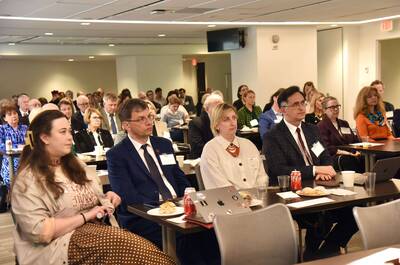
The vitality and continued growth of this university partnership were evident at the recent gathering of the Notre Dame and UCU community in Washington, D.C. Over 100 people came together for The Ukraine Impact Forum: Faith & Resilience. The forum took place at Notre Dame’s Washington Office, providing a vital nonpartisan venue for US and Ukrainian leaders to engage, and was co-organized by Notre Dame Global, the Keough School of Global Affairs, the Nanovic Institute for European Studies, Notre Dame Research, and Ukrainian Catholic University. It brought together faculty and staff from both institutions, civic activists, partners, politicians, and Notre Dame alumni. The goal of the forum was not only to present on joint research projects, but also “to impact policy and future research, start conversations, and engage colleagues and partners around the world,” as Michael Pippenger, Notre Dame’s vice president & associate provost for internationalization, shared in his opening remarks.
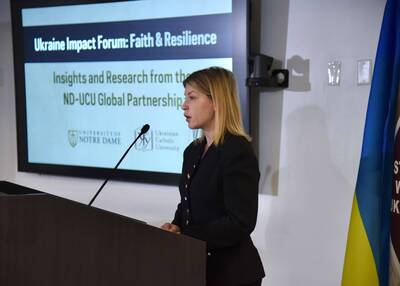
Ambassador Olha Stefanishyna
Other key speakers included Ambassador Olha Stefanishyna, Ukraine’s Ambassador to the United States; Archbishop Borys Gudziak, Metropolitan-Archbishop of the Ukrainian Catholic Archeparchy of Philadelphia and UCU president; Taras Dobko, UCU rector; Yaroslav Prytula, UCU senior vice-rector and provost; Sophia Opatska, UCU vice-rector of strategic development; Jeffrey Rhoads, John and Catherine Martin Vice President for Research at Notre Dame; and Mary Gallagher, dean of Notre Dame’s Keough School of Global Affairs. The forum was also honored to welcome senior government officials, including Naz Durakoğlu, Staff Director, Senate Foreign Relations Committee.
Throughout the course of the day’s events—filled with fireside chats, talks, and presentations—a clear thread emerged. This was a partnership grounded in faith and energized by putting that faith into action.
During her remarks, Ambassador Stefanishyna spoke to the importance of not just academic diplomacy but faith diplomacy: “In times of uncertainty, faith remains the only ground which keeps us united.” She also discussed universities’ role in conflicts, stating that the shared objective of universities is to “translate research into politics and insights into action.” She noted how universities in Ukraine, such as UCU, are turning their experience of crisis into actionable knowledge—exemplified through Ukraine becoming more technologically advanced due to the war.
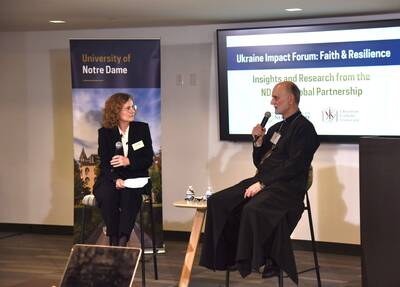
When asked during his conversation with Dean Gallagher what Catholic universities specifically can do in the midst of conflict, Archbishop Gudziak answered, “Do what we do, but do it heart to heart.” Catholic universities are as well-positioned as other universities to provide partnership, research, and resources to those in need. But a Catholic foundation allows institutions to go one step further, emphasizing “integral human development.” This holistic approach recognizes that lasting recovery depends on the development of the whole person, and that researchers at ND and UCU consider data in the context of the human lives and communities it represents.
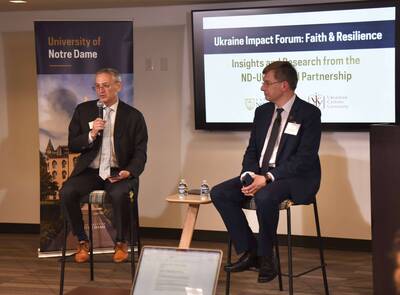
Michael Pippenger and Taras Dobko
During the fireside chat between Pippenger and Dobko, the two discussed what it means to serve at faith-based institutions in a secular society. “I think faith-based institutions are particularly capable, and they have a mission to increase the number of dedicated and passionate people,” Dobko said. Reflecting on UCU’s role in the current crisis, he shared that “UCU should be a source of hope and a source of unity for the Ukrainian people.” For UCU, putting their faith into action means cultivating hope not just among their students and on their campus, but also putting scholarship, research, and science into action to improve the lives and resilience of the Ukrainian people as a whole.
Pippenger remarked on how Notre Dame has learned from UCU’s ability to reinvent the university to meet the needs of a society under duress, to which Dobko emphasized that universities should be communities that not only teach but also learn. “This learning experience comes from responding to the present,” he says. One of the ways Notre Dame and UCU are fostering hope and reacting to the current situation is through research. As Pippenger shared, “We are being led by our hearts, we’re being led by our faith, but it allows us to do practical work that will be transformative in the secular world.”
Some of that practical work was presented at the forum, where faculty teams—each pairing a Notre Dame faculty member with an UCU colleague—presented updates on their ongoing research projects that involved a diverse set of themes and disciplines related to the ongoing conflict, including collective trauma and healing, ethical infrastructure and moral dimensions of security, data science for the common good, and the role of religious diplomacy in the ongoing war. These projects showcased how collaborative scholarship can be a profound form of solidarity and how the synergy between the spiritual and the empirical served as the forum’s true North Star. By presenting rigorous, policy-relevant findings on the ethical infrastructure of reconstruction alongside the data-driven strategies for human resilience, the ND-UCU researchers demonstrated that faith and scholarship are not at odds; they are the dual engines of Ukraine’s resistance, recovery, and reconstruction. One provides the ‘why’—the inherent dignity and moral security of the person—while the other provides the ‘how’—the technical expertise needed to rebuild a sovereign, flourishing society.
This resilience is forged in profound sacrifice; as noted during the forum, the UCU community has already lost 38 of its students, alumni, faculty, and staff to Russian attacks—lives that the partnership seeks to honor through its commitment to a free and flourishing Ukraine. Behind each name is a “whole person”—a world of unique talents, deep family bonds, and vocations cut short.
Dean Mary Gallagher and Archbishop Borys Gudziak
In offering closing remarks, Clemens Sedmak, director of the Nanovic Institute for European Studies and professor of social ethics at the Keough School, emphasized that research projects like these give people reasons to care and overcome the temptation to indifference in the face of great conflict. “Why should you care?” he asked. “Because people are precious, the stakes are high, and the injustice is grave.”
The participants’ presence at this forum was proof that they understood the imperative, but the work is far from over. As Dean Gallagher reflected on the closing remarks, she asked Archbishop Gudziak whether he had a call to action to offer the group as they considered their own commitments in response to the sessions. He shared three: “Pray, because we've seen too many miracles not to understand that God intervenes in history. Second, advocate, inform, be informed, and inform others. And third, help as you can, everybody according to their talents and their means.”
At the end of the day’s talks, Sedmak asked Archbishop Gudziak to lead the group in a closing prayer before the reception. Archbishop Gudziak approached the mic and, instead of leading the group in a typical spiritual reflection, he invited those present to join in prayerful song in Ukrainian. Within seconds, his voice was joined by the Ukrainian members of the gathering. Reflecting on this moment, Pippenger mentioned, "There was a palpable sense of unity in the room. The participants of the Notre Dame and UCU community were united by their faith, by a commitment to preserving the cultural identity resonating throughout the room, and by a shared desire for the common good of one another."
Originally published by Jessie Carson at global.nd.edu on May 18, 2026.
]]>
Jessie Carsontag:washingtonoffice.nd.edu,2005:News/1805232026-03-31T10:00:00-04:002026-03-31T20:06:00-04:00Notre Dame Law Student and Decorated Air Force Veteran Advocates on Capitol Hill During Washington WeekFirst-year Notre Dame Law student and U.S. Air Force veteran Tyler Beamish speaks with Sen. Todd Young (R-IN) at the Hoosier Huddle during Student Veterans of America’s Washington Week 2026.
Tyler Beamish, a Juris Doctor candidate at Notre Dame Law School and a highly decorated U.S. Air Force veteran, recently brought his lifelong commitment to service to Washington, D.C., representing the University at Student Veterans of America’s (SVA) Washington Week 2026. Drawing on his extensive military background, Beamish engaged directly with policymakers to voice the lived experiences of student veterans and advocate for policies that expand access to earned benefits and opportunities.
Prior to pursuing his legal education, Beamish served for eleven years as a Combat Controller in Air Force Special Operations Command (AFSOC). Across multiple deployments, he attached to sister service special operations elements as the lead Joint Terminal Attack Controller (JTAC), directly coordinating airstrikes during combat operations. His specialized expertise also included roles as a JTAC Instructor and Evaluator, a Military Freefall Jumpmaster with more than 200 jumps, a Combat Diver, and an FAA-certified Air Traffic Controller managing forward airfields. For his exceptional service and sacrifice, Beamish was awarded the Bronze Star, the Purple Heart, and the Air Force Combat Action Medal, among numerous other decorations.
As a member of the inaugural cohort of the Dean’s Initiative for Leadership and Scholarly Excellence (LSE) at Notre Dame Law School – a program designed to support students from backgrounds that traditionally have had fewer pathways to law school – Beamish is leveraging his military service and legal education to advocate for student veterans.
During Washington Week, Beamish participated in SVA policy briefings and advocacy workshops focused on promoting veterans’ access to education and resources. Through partnership with the Notre Dame Washington Office, he also met with Indiana congressional leadership to discuss the specific needs of student veterans navigating higher education, including engagement with Sen. Todd Young (R-IN), a Marine veteran; Rep. Rudy Yakym (R-IN) (ND EMBA ‘19), who represents South Bend; and the offices of Sen. Jim Banks (R-IN), an Afghanistan War veteran, and Rep. Jim Baird (R-IN), a Vietnam War veteran.
His advocacy centered on essential improvements to VA education benefits, including reforms to the G.I. Bill book stipend to better reflect current costs. Across Capitol Hill, SVA participants advocated for additional legislative priorities to support student veterans, including protecting study abroad opportunities for military-connected students, establishing robust VA healthcare and mental health resources on college campuses, and strengthening support for the Public Service Loan Forgiveness (PSLF) program.
"One of the most eye-opening moments for me was simply seeing how many people were in the halls of Congress advocating for veterans," Beamish reflected. "We happened to be there the same day that the VFW, the American Legion, and Student Veterans of America were participating in hearings. As a veteran myself, it was encouraging to see that magnitude of advocacy happening at the highest levels of government."
Student Veteran Tyler Beamish poses for a photo with Rep. Rudy Yakym (R-IN) (ND EMBA '19) following a meeting in the Cannon House Office Building.
Beamish noted that the key to effective advocacy was grounding those priorities in tangible realities. "When talking about increasing the GI Bill book stipend, being able to explain with real numbers how the current stipend only covers a small portion of actual book costs made it much easier to identify the problem and present a coherent solution," he explained.
"If I’m being honest, it felt a little awkward at first. I’ve never worked in the policy or political space before, so it was all new to me," Beamish admitted. "But the Congressmen and staff we spoke with were very receptive and genuinely interested in learning about the issues we were advocating for. The most surprising thing for me was the sheer volume of work happening inside a congressional office. Congress is dealing with thousands of bills each year... A bill might have the potential to do a lot of good, but if no one is raising awareness or encouraging members of Congress to look closely at it, it can easily get lost in the hustle and bustle."
Beamish’s representation of the University during Washington Week underscores Notre Dame’s enduring commitment to its military-connected students. The Office of Military and Veterans Affairs and the Notre Dame Washington Office are proud to empower student veterans like Beamish as they leverage their lived experiences for meaningful impact, both on campus and in our nation’s capital.
"Overall, as a law student learning about the structure and function of our government and how to analyze complex policy questions, this trip really demonstrated how the things I’m studying work in practice," Beamish said. "It was an incredible experience, and I would strongly encourage any veteran who has the opportunity to attend Washington Week to take advantage of it."
Student Veteran Tyler Beamish poses for a photo with Sen. Todd Young (R-IN).
Originally published by Michael Labbe at omva.nd.edu on March 31, 2026.
]]>
Michael Labbetag:washingtonoffice.nd.edu,2005:News/1805252026-03-27T20:16:00-04:002026-03-31T20:16:29-04:00Notre Dame gathers experts to strengthen American peacebuildingLiz Hume, executive director of the Alliance For Peacebuilding, speaks during a panel discussion while Keough School visiting professor of the practice Peter Quaranto, left, and professor emeritus George A. Lopez, right, listen.
Amid record levels of global conflict and reduced funding, the University of Notre Dame convened peacebuilding scholars and leaders March 10 in Washington, D.C., to explore strategies for adapting in a volatile world.
The gathering focused on a forward-looking agenda in a time of disruption, outlining proactive approaches to meet today’s challenges. Contributors emphasized framing peacebuilding as a crucial national security investment, building a broader coalition to combat growing skepticism and developing innovative strategies.
“As a field, peacebuilding has developed valuable knowledge, research and practical solutions,” said Peter Quaranto, visiting professor of the practice and distinguished global policy fellow at the Keough School. “But it must adapt and innovate to be relevant in the current political and conflict landscape.”
Connecting peace to national security
Discussion acknowledged the twin challenges peacebuilding must confront. Globally, there are now more than 60 conflicts — including a widening regional war with Iran — the most since World War II. At the same time, many traditional institutions that support peacebuilding face funding uncertainty and structural changes.
Retired Navy Admiral Gary Roughead, right, talks with former Ambassador George Moose, chair emeritus of the United States Institute of Peace. Roughead urged policymakers and practitioners to connect peacebuilding to national security.
In this environment, speakers said it is more important than ever to demonstrate how peacebuilding can provide a return on investment for the United States by reinforcing national security.
Retired Navy Admiral Gary Roughead, the conference’s keynote speaker, detailed a growing list of threats that could contribute to worsening conflict, including climate change, artificial intelligence and an eroding nuclear deterrence framework. Given these challenges, he said the United States should invest in preventative soft power to better protect its security.
“The United States faces a strategic and moral imperative to invest deliberately in peacebuilding,” Roughead said. “Peacebuilding complements national defense.”
Proactive national security requires input from the legislative branch that is now sorely lacking, according to former U.S. Senator Russ Feingold and former Ambassador Mark A. Green, president emeritus of the Woodrow Wilson International Center for Scholars. They called for Congress to reassert its constitutional authority in deciding whether the country goes to war. The United States has not had a formal declaration of war since World War II and Congress has largely deferred to the president on conflicts, Feingold said, but a more proactive Congress could keep the United States out of unpopular wars.
Building a broader coalition
While strengthening the national security case for peacebuilding is critical, speakers said rebuilding domestic support for the field may be just as important.
That starts with addressing Americans’ declining trust in public institutions and foreign investments. A recent Pew study found that only 22 percent of Americans say they trust the federal government to do the right thing (down from about 75 percent 60 years ago). Meanwhile, Gallup has found that only 45 percent of U.S. adults now say they trust the federal government to handle international problems.
Against that backdrop of deep skepticism, peacebuilding must engage with a broader cross-section of society, speakers said. That includes incorporating perspectives from different communities, including grassroots activists, veterans and people of faith. Panelists also urged practitioners to apply global peacebuilding experiences, skills and tools to address growing conflicts and polarization within the United States and strengthen American democracy.
Jake Harriman, a Marine Corps veteran and the founder of More Perfect Union, explored the concept of peacebuilding at home during his remarks. When he returned to the United States in 2015 after years of military service and sustainable development work, he was shocked by the extreme rhetoric and growing polarization he witnessed. That led him to start the civic organization, which facilitates trust and consensus building by connecting people with different backgrounds and views, enabling them to work together on service projects, shared activities and civic engagement.
“Step one has to be bringing Americans together in compelling ways to give them a seat at the table to do things in their community together and to humanize the other side again,” Harriman said. “We have to get people talking to other Americans who don’t look, act or think like them.”
Globally, coalition building should include giving Indigenous communities a seat at the table, speakers said. Approximately 80 percent of the world's conflicts are in sensitive biodiversity hotspots where Indigenous people live, according to Binalakshmi (Bina) Nepram, founder of the Global Network of Indigenous Peacebuilders, Mediators and Negotiators. Yet peacebuilding often overlooks perspectives from the people who are most affected.
Innovating to meet today’s challenges
While inclusive coalitions and clearer security arguments can strengthen the case for peacebuilding, practitioners and policymakers must also devote serious attention to innovation, speakers said. In a skeptical, more-with-less environment, they emphasized that business as usual won’t be enough to elevate the field.
Education was one area speakers said could benefit from fresh thinking. George A. Lopez, the Rev. Theodore M. Hesburgh, C.S.C., Professor Emeritus of Peace Studies at the Keough School, called for educators to think more broadly about how they can train effective global citizens — not only frontline diplomats and practitioners, but also professionals who will bring critical peace perspectives to their careers in a variety of fields, including including medicine, law and finance.
Lisa Schirch, the Richard G. Starmann, Sr. Professor of the Practice of Peace Studies at the Keough School, stressed the need for technological innovation that supports problem-solving and consensus in a polarized world.
Technology is also ripe for innovation, speakers said. Lisa Schirch, the Richard G. Starmann, Sr. Professor of the Practice of Peace Studies at the Keough School, pointed to an emerging class of deliberative technologies that are meant to serve as an alternative to toxic social media. That means prioritizing problem-solving and surfacing areas of consensus rather than using rage-bait tactics and us-vs.-them framing to monetize users' attention.
Philanthropy could also benefit from new approaches. Emma Belcher, president of Ploughshares, a grantmaking organization that works to reduce the threat of nuclear weapons, noted that organizations that fund peacebuilding are asked to simultaneously serve as "firefighters and architects.” She called for more strategic investments to address root causes rather than simply throwing money at a succession of crises.
The conference showcased deep expertise from scholars as well as former legislators, diplomats and practitioners. Speakers drew on decades of experience with institutions including the United States Institute of Peace, the American Peacebuilding Alliance and the U.S. Department of State, as well as universities and private foundations.
Throughout the conference, speakers returned to a common theme: American peacebuilding must evolve to address a more volatile global environment. That means demonstrating its value to national security, building broader domestic and global support and developing new tools and approaches that will help policymakers and practitioners respond to emerging challenges.
The conference is part of broader work to inform peace policy and practice. The Keough School and its Kroc Institute, in partnership with the Alliance for Peacebuilding, will continue to foster conversations about how to sustain and reorient peacebuilding expertise to meet evolving global and national challenges, including more discussion with current U.S. and global officials.
“We face unprecedented levels of conflict with devastating humanitarian and human rights consequences, as well as serious strategic implications,” Quaranto said. “These conversations can help inform a research and action agenda to guide the future of peacebuilding.”
Watch: American Peacebuilding at a Crossroads: Lessons, Risks and the Road Ahead
Originally published by Josh Stowe at keough.nd.edu on March 26, 2026.
]]>
Josh Stowetag:washingtonoffice.nd.edu,2005:News/1805242026-03-27T10:00:00-04:002026-03-31T20:06:42-04:00Notre Dame Department of Theology ranked best in the world for second consecutive year
The University of Notre Dame has again been ranked as the world’s best theology, divinity and religious studies program by the influential QS World University Rankings. This is the second consecutive year and the fifth time since 2020 that the Department of Theology has received the No. 1 distinction.
The ranking is based on academic reputation, employer reputation and research impact. Out of 150 universities included, Notre Dame’s score of 92.2 bested the University of Oxford (89.2), Harvard University (89.1), Durham University (88.7) and Boston College (88.3).
“To be ranked No. 1 in the world for two years in a row is a momentous accomplishment for which all our faculty and staff deserve great credit,” said Fr. Khaled Anatolios, the John A. O’Brien Professor of Theology and chair of the department. “As a department, we take the measure of our own performance less from external rankings than from fidelity to our mission. Nevertheless, these consistently top rankings demonstrate that our fidelity produces scholarly results that are literally second to none in commanding international admiration.”
In addition to offering a doctorate and four master’s degree programs, Notre Dame’s theology department maintains a strong commitment to undergraduate education by supporting more than 800 theology majors or minors and teaching the theology courses that all Notre Dame students take as part of the University’s Core Curriculum.
Originally published by Arts & Letters at al.nd.edu on March 26, 2026.
]]>
Arts & Letterstag:washingtonoffice.nd.edu,2005:News/1828742026-03-23T14:20:00-04:002026-07-06T14:20:56-04:00Notre Dame researchers uncover the molecular driving force behind hallmark of aggressive, metastatic cancers
To invade healthy tissues and continue growing, aggressive cancers mimic and circumvent the body’s native piping system of veins and arteries. Through this process, known as vasculogenic mimicry (VM), tumor cells form fluid-conducting channels that transport blood, oxygen, and nutrients directly to the growing tumor.
This behavior enables tumor metastasis and tissue invasion, lowering patient survival rates. But despite VM’s wide-ranging consequences in one-third of all cancers, its exact mechanism is unknown, which makes it difficult to target as a treatment for the disease it enables.
Katharine White and Donny Hanjaya-Putra have joined forces to study a phenotype of aggressive cancers.
A recent study from researchers at the University of Notre Dame remedies this knowledge gap. Katharine White, a cancer biologist, and Donny Hanjaya-Putra, a biomolecular engineer, teamed up to investigate the cancer microenvironment that drives VM formation and found that the microenvironment altered pH inside cancer cells, and VM formation is pH-dependent.
Further, the White research group identified the molecule responsible for VM’s pH-dependent formation: Beta-catenin, a multi-functional protein that controls gene expression, cell-cell adhesion, and development. The work opens the door to the discovery of new, life-saving treatments for VM. Their findings were published in Cell Death & Disease.
“Ultimately, this work can pave the way for new therapeutic strategies that target VM’s pH-sensitivity, offering a novel approach to cancer treatment that complements existing therapies,” White said.
In gel models, VM depends on pH, not tumor stiffness
White, the Clare Boothe Luce Assistant Professor in the Department of Chemistry and Biochemistry, studies how pH dynamics regulate proteins, pathways, and cell behaviors. As specialists in the role of pH in driving disease, researchers in the White Lab study how changes in proton concentration affect the behavior of proteins, cells, and whole tissue environments.
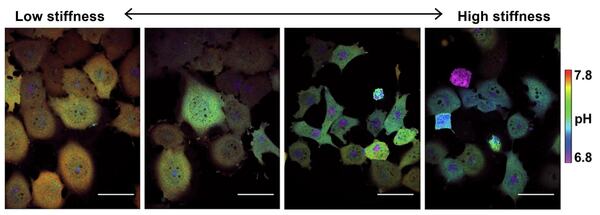
The pH of single lung cancer cells decreased as the researchers increased the stiffness of the hydrogel models. Red fluorescence indicates high pH, while purple fluorescence indicates low pH.
“It’s now widely accepted that pH is dysregulated in cancer cells compared to healthy cells, and pH differences could drive many of the behaviors that are hallmarks of cancer,” said White, who is a faculty affiliate of the Harper Cancer Research Institute.
To study VM outside of the body, however, White needed a good model – a system that could imitate the behavior of the cancer microenvironment, to the extent possible, outside of patient tissues while being more reproducible and controllable for research. Hanjaya-Putra, an associate professor in the Department of Aerospace and Mechanical Engineering and affiliate of the Bioengineering Graduate Program and the Harper Cancer Research Institute, contributed his expertise in biomimetic materials—substances that imitate biological tissues—to help develop these lab-bench models.
A known driver of VM is an increased stiffness of the structure that holds cells together. To form tissues, cells are surrounded by the extracellular matrix (ECM): a three-dimensional network of proteins and sugars that provides necessary support. In cancer, this ECM is stiffened, which is one reason why tumors are harder than the surrounding normal tissue and can be felt as a lump. In order to investigate the effect of matrix rigidity on VM, the researchers developed two gel-based models that could be tuned across the spectrum of soft, mimicking normal tissue, to stiff, mimicking the cancer microenvironment.
With the hydrogels prepared, the White Lab added cancer cells to both soft and stiff gels and measured the pH of the cells on each. They found that pH was significantly lower for the cells on the stiff gel compared to the soft gel.
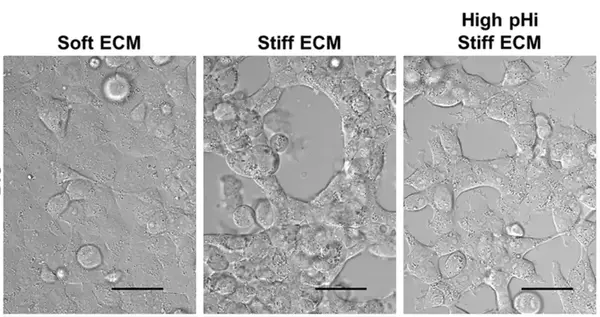
The vasculogenic mimicry phenotype, characterized by tightly packed cell networks, is observed in cells on a stiff matrix and not observed in cells on a soft matrix. When the low pH of cells on a stiff matrix was increased, the cells lost the ability to form the tightly packed networks of VM.
Further, the cells on the stiff model squished together to form craters and hills, a precursor to full-fledged VM, while the cells on soft matrix remained flat and smooth, appearing like cobblestones. While promising, the correlation between low pH and stiffness-driven VM did not reveal pH as the cause.
“If there exists a direct causal relationship between matrix stiffness lowering the pH of the cancer cells and driving VM, then we should be able to raise the pH of the cells and see the stiffness response, VM, disappear,” said Leah Lund, a recent doctoral graduate from the White Lab, who led the study. “And so we tested that.”
The researchers raised the pH of the cells plated on the stiff matrix with a special ionic treatment. As pH was raised, the tense, uneven VM precursor relaxed into a flat pane of cells. The reverse was true, too. When the pH of cells plated on the soft model was lowered, the cells formed the same proto-VM peaks and crevices seen when plated on the stiff model.
“If VM only depends on the stiffness of the environment around the tumor, changing the pH would have had no effect on the shape of the cells,” Lund said. “Instead, pH appears to be responsible for the change in cell arrangement.”
A single protein is a key controller of VM
When pH changes drive major reorganization of cells, as was observed in the study of VM, a specific protein is likely responsible. To determine the culprit for the pH-sensitivity of VM, the researchers zeroed in on two proteins that previous studies had linked to VM formation: FOXC2 and beta-catenin.
Lund and colleagues repeated a previous experiment, placing lung cancer cells on stiff gel and increasing the pH, but this time, they also measured activity of Beta-catenin and FOXC2, respectively. While a loss of VM-like peaks and valleys was again observed, FOXC2 activity remained unchanged, while beta-catenin activity plummeted.
“It appears that pH regulates beta-catenin, which in turn regulates the level of VM,” White said. “We saw a decrease in VM formation at high pH because beta-catenin ceases to function above a certain pH point and, in turn, that loss of function wipes out the ability of the cells to achieve VM.”
To verify this link between VM formation and beta-catenin, the researchers repeated the original pH-raising experiment again, but this time introduced a molecule that rescues the beta-catenin activity even when the protein’s activity is dampened by pH. At high pH, with beta-catenin activity restored and unable to be repressed by the high pH of the cells, VM formation remained high.
“A rigid environment alone is not enough to drive the formation of vasculogenic mimicry,” White said. “In reality, low pH stabilizes beta-catenin and is necessary for the VM behavior to develop and persist on stiff environments.”
"Beta-catenin is the final piece in this puzzle of VM activity that will really have an impact,” added Lund. “Correlation is one thing, but we managed to find the link between pH and VM via the actual protein responsible.”
Next steps: Graduating from 2-D models to cancer treatments
With the link established between beta-catenin and VM, the protein can be targeted to treat the aggressive cancers that change their shape to mimic vascular networks. For example, a drug that modulates the pH of cancer cells or eliminates beta-catenin activity could reduce VM and the key pathways it provides for the tumor to receive nutrients, thereby weakening the tumor itself.
In addition, “tumors that develop VM are more resistant to chemotherapeutic drugs and traditional immunotherapies, so finding a way to change how these cells respond to that stiff and dysregulated environment is very important for patients,” White said.
The White Lab, which is affiliated with the Harper Cancer Research Institute, studies how changes in proton concentration affect the behavior of proteins, cells, and whole tissue environments, and drive diseases like cancer. (Photo by Matt Cashore/University of Notre Dame)
For lead author Lund, the translation of experiments in the lab to treatments in the clinic is personal. Lund’s mother was fighting her second battle against breast cancer while Lund was discerning which lab to join as a new doctoral student at the University.
“At the time I was doing rotations and deciding which lab and what research I wanted to devote my PhD studies to, cancer was at the forefront of my personal life,” Lund said. “She's now in remission two times over, but my mom’s second diagnosis was a huge motivator for this research.”
In order to reach the treatment stage, however, the interaction between beta-catenin, stiffness, and pH needs to be better understood. The White and Hanjaya-Putra Labs are developing three-dimensional models for these interactions, which will more closely mimic patient tumors. They will use these models to better observe how the VM networks form and interact with the surrounding normal cells and immune cells that come to fight the cancer.
“Aggressive cancers have devastating effects on patients and families,” White said. “With a better understanding of the complicated processes that drive metastasis and drug resistance, we can develop better treatments and deliver better outcomes.”
The National Institutes of Health and American Cancer Society provided funding support for this study. Learn more about cancer research at Notre Dame by visiting the Harper Cancer Research Institute's website.
Modified images from the study appear courtesy of the White Lab, University of Notre Dame. Originally published in Cell Death & Disease (2025) under CC BY 4.0.
The University of Notre Dame is a private research and teaching university inspired by its Catholic mission. Located in South Bend, Indiana, its researchers are advancing human understanding through research, scholarship, education, and creative endeavor in order to be a repository for knowledge and a powerful means for doing good in the world. For more information, please visit NDR's website or NDR's LinkedIn.
Originally published by Erin Fennessy at research.nd.edu on March 23, 2026.
]]>
Erin Fennessy Lawlortag:washingtonoffice.nd.edu,2005:News/1828752026-03-09T14:21:00-04:002026-07-06T14:21:41-04:003D-bioprinted model offers new way to study and treat obesity-related heart disease
Heart disease is the leading cause of death among people with obesity, a condition affecting one in eight people worldwide. Studies show that fat around the heart can fuel inflammation, damage heart muscle cells, disrupt heart rhythm and increase the risk of heart failure, but the precise mechanisms remain unclear.
To better understand how obesity affects the heart, Pinar Zorlutuna, the Roth-Gibson Professor of Bioengineering at the University of Notre Dame, and her lab have developed a 3D-printed model that integrates heart and fat cells to mimic obesity’s effects and test potential therapies.
Doctoral student Lara Çelebi (left) and Pinar Zorlutuna
Their results were published in Advanced Science. Lara Çelebi, doctoral student in bioengineering at the University of Notre Dame, is the paper’s first author.
“The fat cells that surround the heart are different from those that surround the body’s other organs in that they share blood vessels,” said Zorlutuna. “Substances released by the fat—such as hormones or inflammatory chemicals—can move directly into the heart muscle. This close connection enables fat around the heart to affect heart health more than fat stored elsewhere.”
While some fat around the heart is necessary since it supplies energy, supports blood vessels and aids metabolism, fat cells in obese people behave differently. When these cells are overloaded with too much fat, they enlarge and malfunction chemically.
Using mice and rats to study this relationship is not effective because rodent fat does not touch the heart. To replicate how heart tissue behaves in obese patients, Zorlutuna’s team needed a 3D structure where heart and fat cells could interact.
First, her team reprogrammed stem cells so that they developed into fat and heart cells, specifically from the atria, the heart’s upper chamber, since obesity increases the risk of atrial fibrillation by about 50%. Then, with the aid of a 3D bioprinter, the team layered the heart and fat cells into a gelatin and collagen scaffold that mimicked human tissue.
Preserving the enlarged nature of the fat cells was key, but it also made them too fragile to print. To resolve this, the team 3D printed “baby” fat cells, growing them to their problematic size within the 3D engineered tissue.
Bioprinting heart and fat cellsHeart and fat cells in a gelatin and collagen scaffold that mimics human tissue
Ultimately, the team’s 3D printed model, not only accurately demonstrated the dysfunctional relationship that can develop between heart and fat cells, but the efficacy of metformin (a common diabetes medication) in reversing some of the harmful effects of enlarged fat cells. The drug improves both how strongly heart cells contract and how efficiently heart cells use energy.
“For the first time, we’ve built human heart tissue that includes real fat, giving us a lifelike model to study how obesity drives heart disease,” said Zorlutuna. “This platform allows us to identify and prioritize the most effective treatments before they ever reach animal or clinical trials.”
This research was supported by the National Institutes of Health and the National Science Foundation.
]]>
Karla Cruisetag:washingtonoffice.nd.edu,2005:News/1798562026-03-09T10:00:00-04:002026-03-10T14:05:20-04:00Keough School expert contributes engineering and policy expertise to U.S. government panel on housingPhoto by Ava Jung via pexels
Housing affordability remains a top economic issue globally, and especially for American households, with homeowners’ and renters’ budgets strained by rising costs.
To address this crisis, the U.S. Government Accountability Office (GAO) recently convened an expert panel, selecting Tracy Kijewski-Correa, the William J. Pulte Director of the Keough School’s Pulte Institute for Global Development, to advise on the promise and limits of new building technologies. The GAO provides fact-based, nonpartisan analyses to assist Congress with the oversight of federal programs. Recommendations from the expert panel will inform a public report that will be sent to members of Congress later this year.
Convening with high-level government officials, business leaders and representatives from the nonprofit sector, Kijewski-Correa, professor of global affairs and the Frank M. Freimann Professor of Structural Engineering and Hazard Resilience, shared expertise related to housing planning and design, construction methods and building materials.
Key policy shifts for affordability
Kijewski-Correa said two policy changes are needed to increase housing availability and affordability: zoning reform and adaptive re-use.
“Current zoning regulations in many cities ‘box out’ diverse housing solutions that could address low-income demand, especially what we call the ‘missing middle,’ such as low-density multi-family housing,” she said. “Allowing a wider variety of housing types, including tiny homes, is essential to grow supply.”
Promoting mixed-use development and the conversion of commercial properties — such as abandoned schools, factories and warehouses — into housing could tap into existing inventory, especially for highly vulnerable populations, Kijewski-Correa said.
“This approach is not only cost-effective but also helps to revitalize areas suffering from blight.”
Overcoming resistance to new technology
A civil engineer with interdisciplinary expertise in homeowner responses to housing policy, Kijewski-Correa emphasized the role of behavior change in driving the adoption of new building technologies by homeowners, builders and building officials who oversee regulatory instruments and processes such as building codes and permits.
“New technologies can be very disruptive,” Kijewski-Correa said. “People in the industry may be afraid that they will be replaced by them.”
Kijewski-Correa highlighted the importance of “skilling up” workers through education and job training, citing an Integration Lab (i-Lab) project with Habitat for Humanity in Mexico City and Chennai, India. Working with local masons, a student team used behavior change insights to promote new, safer and more resilient construction methods — such as pre-fabricated home kits — to improve housing quality for low-income families in disaster-prone regions.
Kijewski-Correa also referenced the importance of a comprehensive, lifelong “K-to-grey” workforce development approach that spans from elementary education through a worker’s entire career.
“Through career and technical education programs such as Project Lead the Way, young people interested in the building trades can receive early exposure to new technologies,” she said.
Actionable solutions: regional hubs and resilience
Notre Dame engineering and global affairs scholar Tracy Kijewski-Correa contributed to a new federal report recommending "regional hubs of excellence" to help municipalities adopt 3D-printing and modular construction.
To overcome local barriers to adopting new building methods such as 3D-printing and modular construction, Kijewski-Correa also recommended forming “regional hubs of excellence.”
“Many small municipalities are understaffed and lack the engineering capacity to evaluate and approve new technologies. They will either resist change, or if change is imposed on them, experience significant delays in zoning, permitting and inspection of these new housing models,” she said. “These regional hubs would provide local officials with the necessary training, guidance documents, and even plan review services to confidently update their processes to accommodate new housing technologies.”
Kijewski-Corea leveraged her extensive experience with the Structural Engineering Extreme Events Reconnaissance (StEER) network to emphasize the benefits of technology beyond upfront cost, specifically regarding societal resilience. Through post-disaster surveys, StEER has documented how manufactured housing often performs better than site-built homes in extreme weather events.
“This real-world evidence is critical for dispelling reservations and demonstrating that advanced, factory-built housing is not only safe but can outperform traditional construction,” she said. “In addition, it’s important to remember that life-cycle costs matter. Don’t trade resilience for affordability. Housing that might be cheap to purchase on day one can leave families incredibly vulnerable if it is burned down in a wildfire or destroyed by a hurricane.”
The final takeaway: housing as infrastructure
Ultimately, Kijewski-Correa’s key recommendation for federal agencies and Congress was to fundamentally rethink housing, prioritizing the well-being of residents and the resilience of communities over a purely profit-driven approach.
“Housing is infrastructure, not a commodity,” she said. “It is a foundational component of the nation’s economic, health and educational systems, and by recognizing this, we pave the way for a more equitable and resilient future for all.”
Originally published by Renée LaReau at keough.nd.edu on March 09, 2026.
]]>
Renée LaReautag:washingtonoffice.nd.edu,2005:News/1798572026-03-06T10:00:00-05:002026-03-10T14:06:18-04:00Notre Dame joins the Global Federation of Competitiveness Councils, a network dedicated to enhancing prosperity worldwide
The Global Federation of Competitiveness Councils (GFCC) recently welcomed the University of Notre Dame to its global network of thought-leading institutions shaping the future of higher education and innovation.
Notre Dame has been at the forefront of groundbreaking research across multiple disciplines, with notable contributions in cancer, maternal health, advanced hurricane forecasting, avian virus detection, and community regeneration. These efforts reflect the University’s emphasis on research that delivers human-centered solutions to complex global challenges.
“Notre Dame brings a powerful combination of ethical leadership and research excellence to the GFCC network,” said Deborah L. Wince-Smith, president of the GFCC. “As a world-leading Catholic research university, its work in innovation, health, and community impact contributes valuable insight and practical solutions to some of today’s most pressing societal challenges, including poverty and inequality.”
“By joining the GFCC, Notre Dame is in an even better position to tackle the world's most complex challenges, in tandem with a network of global innovators,” said Jeffrey F. Rhoads, the John and Catherine Martin Family Vice President for Research and professor in the Department of Aerospace and Mechanical Engineering.
“We are eager to share our distinctive perspective as a Catholic research university, where high-impact discovery is anchored by a commitment to the common good and inclusive prosperity. This partnership with the GFCC embodies our aspiration to drive integral human development and flourishing through collaborative, mission-driven research.”
Originally published by GFCC Staff at research.nd.edu on March 06, 2026.
]]>
GFCC Stafftag:washingtonoffice.nd.edu,2005:News/1798582026-03-05T14:10:00-05:002026-03-10T14:10:21-04:00Notre Dame, Catholic University to mark American semiquincentennial with April 9 symposium in Washington
As the United States approaches the 250th anniversary of the Declaration of Independence, the Center for Citizenship and Constitutional Government (CCCG) at the University of Notre Dame will partner with the Center for the Constitution and the Catholic Intellectual Tradition (CIT) and the Carroll Forum for Citizenship and Public Life at the Catholic University of America to host a major academic symposium examining Catholicism and the American founding.
Titled “Endowed by Their Creator: Catholicism, the Declaration of Independence, and the American Experiment at 250,” the symposium will take place Thursday, April 9, 2026, on CUA’s campus in Washington, D.C. The gathering is intended to serve as a premier scholarly forum during the semiquincentennial year, convening leading academics, jurists, and public intellectuals to consider the philosophical and theological foundations of the American experiment in constitutional self-government.
“This anniversary provides an opportunity not merely for celebration, but for serious intellectual examination,” said Phillip Muñoz, director of the CCCG. “The Declaration advances claims about human equality, rights, and moral accountability that remain foundational to our political life. The Catholic intellectual tradition has long engaged these same questions. Our hope is to foster a careful and rigorous conversation about their relationship and their continued significance for constitutional government.”
Joel Alicea, a professor at CUA and the director of CIT, underscored the importance of hosting the symposium in the nation’s capital.
“At 250 years, we are called to reflect more deeply on the principles that have shaped the American experiment,” Alicea said. “By bringing scholars of Catholic thought into dialogue with the Declaration’s arguments, this symposium aims to clarify the moral and philosophical foundations of our constitutional order and to explore the resources available for its renewal.”
The daylong program will begin with Mass at 9:15 a.m. in St. Vincent Chapel, followed by three academic panels and two keynote conversations.
The first panel, “The Declaration and the Catholic Intellectual Tradition,” will feature Bradley Lewis of CUA; Vincent Phillip Muñoz of Notre Dame; and D. C. Schindler of the John Paul II Institute, moderated by Michael Promisel of CUA.
A lunch keynote and fireside chat will follow, featuring Robert P. George of Princeton University in conversation with his former student, Fr. Henry Stephan, O.P. of Notre Dame.
The second panel, “The Declaration and Constitutional Interpretation,” will include Kevin Walsh of CUA; Judge Whitney Hermandorfer of the U.S. Court of Appeals for the Sixth Circuit; and Charlie Capps of Arizona State University, moderated by Alicea.
The third panel, “Catholic Social Thought and the American Experiment,” will feature Russell Hittinger of CUA; Kenneth Grasso of Texas State University; and Ryan T. Anderson of the Ethics and Public Policy Center, moderated by CUA’s Sarah Gustafson.
All sessions will be recorded and made available for later viewing to ensure broad access for those unable to attend in person.
Launched in 2021, the Center for Citizenship and Constitutional Government at Notre Dame seeks to cultivate thoughtful and educated citizens by supporting scholarship and education concerning the ideas and institutions of constitutional government. For additional details, including registration information, visit constudies.nd.edu/america250.
Contact: Anna Bradley,CCCG Assistant Director, 574-631-8050 or abradle4@nd.edu
Originally published by Anna Bradley at constudies.nd.edu on March 05, 2026.
]]>
Anna Bradleytag:washingtonoffice.nd.edu,2005:News/1793672026-02-11T19:50:00-05:002026-02-18T19:50:04-05:00Notre Dame outdoor ice chapel Mass brings thousands togetherThis story was originally published by The Observer, and is reposted with permission.
Two thousand Consecrated Hosts proved not enough for the crowd
Thousands of members of the tri-campus and South Bend community braved 19-degree weather and gathered for Candlemas Mass at an unexpected location: an ice chapel.
At 10 p.m. Monday, the newly-consecrated St. Olaf’s Ice Chapel glowed with candlelight on the University’s North Quad. Altar servers processed an icicle cross and processional candles with stems of ice through a sea of people standing and kneeling in the snow. A conjoined choir, conducted by Kaleb Reil, sang “Lift High the Cross.”
The sacrament of Communion took over 30 minutes, and co-celebrants Fr. Greg Haake and Fr. Pete McCormick ran out of consecrated hosts even after dividing wafers into shards. McCormick later announced 1,600 consecrated hosts had been distributed, though the actual number was at least 2,000. There were 1,500 consecrated at St. Olaf’s and an additional 500 previously consecrated hosts from the Saint Albert the Great Chapel in Zahm Hall.
An ice cross stands in front of Fr. Gregory Haake during the St. Olaf’s Ice Chapel Candlemas Mass on Feb. 2, 2026.
Sophomore James Burke received the very last consecrated host, followed by hundreds of students who missed out. Total attendance was unclear but likely numbered around 2,500. The Basilica of the Sacred Heart, the largest chapel at Notre Dame, seats 800.
“I’m super glad I went,” Burke said. “I was inspired both by the work that had been done building it and the University’s decision to embrace that creativity by holding Mass there tonight.”
Junior John Geitner arrived 40 minutes early, calling it a “once in a lifetime experience.” Before the Mass, some students could even be seen climbing trees for a better view, reminiscent of the biblical Zacchaeus.
The idea originated with seniors Wesley Buonerba and Martin Soros, both residential assistants in Coyle Hall, who decided to try their hands at building with snow and ice after seeing the success of another Coyle resident, sophomore Liam Devine, who built an igloo.
Soros is a civil engineering major while Buonerba is an architecture student and a sacristan in the Basilica of the Sacred Heart. Both are students of theology.
Soros estimates they spent well over 50 hours building the chapel. They began by making bricks by layering snow and water in recycling bins. Then, they used a car hood from Coyle’s signature car smash fundraiser to form arches with the bricks.
The St. Olaf’s Ice Chapel at Notre Dame during the Candlemas Mass on Feb. 2, 2026.
“A lot of it has been very experimental,” Soros said, explaining they tried many methods to create the chapel’s colorful stained-glass windows and icicle cross adornments. Students across the tri-campus community joined them nightly to support the building process. They kept their hands warm by alternating latex gloves and waterproof gloves, though Buonerba reported reaching what he called “a state of equilibrium with nature” after a while.
Soros and Buonerba decided to organize a Mass in the chapel as an evangelization opportunity.
Buonerba was inspired after attending Mass in a field during World Youth Day Lisbon 2023, where he said, “It felt like it was you and Christ alone, even though you’re surrounded by one and a half million other young people from around the world.”
“The mission is just to bring people together,” Soros said. “I think a big idea for us too is to bring people to mass who don’t usually go, which for us is super important, you know, reaching out and spreading the love and mercy of Jesus.”
McCormick, director of Campus Ministry and Haake, a priest-in-residence for Coyle Hall, were both invited to celebrate the Mass.
Fr. George Haake during the Candlemas Mass at Notre Dame on Feb. 2, 2026.
“We checked with the diocesan regulations to make sure everything was appropriate and in keeping with Church guidelines, and there were no issues,” McCormick said. “The Church has a long history of celebrating the sacraments in a wide range of settings, as long as the essential elements are respected.”
Prior to the ice chapel, McCormick once celebrated Mass on the hood of a Jeep in East Africa, which he said was “unforgettable and warmer.”
During the Homily, McCormick said, “After I’ve given this homily espousing the greatness of the faithfulness of Mary, the only fitting conclusion is that we sing “Notre Dame, Our Mother.” The crowd locked arms to sway and sing Notre Dame’s alma mater. The Mass concluded with the song, “O God Beyond all Praising.”
When asked about his feelings about the ice chapel melting as temperatures warm, Buonerba did not think negatively about it.
“Memento mori. This too shall pass, and that's okay,” he said.
But those sad to see the chapel go need not worry. Sophomore Jonah Blay, who assisted Devine in building the igloo’s roof, shared that Coyle is considering adding an ice village commissioner to its hall leadership team.
“The world we’re in right now is becoming really cold, and we’ve experienced that a lot in a very intimate way this past week, on some of these mornings. But I think we should learn to change our focus,” Buonerba said. “You can focus on the biting wind, the piercing cold, the frostbite, the wet hands, or you can focus on what you can do with the snow, what you can do with the water, what you can have fun with in your community, and what you can build out of that coldness and what joy that can bring.”
This story was originally published by The Observer, and is reposted with permission.
Originally published by Chloe Hanford at admissions.nd.edu on February 11, 2026.
]]>
Chloe Hanfordtag:washingtonoffice.nd.edu,2005:News/1790872026-02-04T20:22:00-05:002026-02-10T20:23:02-05:00Notre Dame home to national collaboration to strengthen critical thinking and civil discoursePaul Blaschko leads a class in the First Lecture Series at Welcome Weekend, giving new Notre Dame students their first taste of academic life in the College of Arts & Letters. (Photo by Jon L. Hendricks/University of Notre Dame)
Led by a team of faculty, civic institutes, and nonprofit partners across the U. S., the ICDC project brings together educators across institutions to integrate critical thinking and civil discourse at scale.
The University of Notre Dame has been awarded nearly $4 million in a four-year grant from the U.S. Department of Education (DOE) to fund a new initiative that will incorporate tools and strategies for teaching critical thinking into college classrooms around the country.
Supporting a project called Integrating Civil Discourse into the Curriculum at Public, Private, Community, and Historically Minority-Serving Colleges and Universities (ICDC), the grant comes out of the DOE’s Fund for the Improvement of Postsecondary Education Special Projects Program, which focuses on, among other priorities, protecting and promoting civil discourse in higher education.
In support of that mission, ICDC brings together a team of faculty from universities and colleges around the country with nonprofit leaders to integrate two online technologies that teach critical thinking into undergraduate curricula.
“We’re going to ask this question, ‘Can we expand the reach of effective critical thinking strategies in ways that could impact how we dialogue with each other on a national scale?’” said Paul Blaschko, an assistant teaching professor in the Department of Philosophy and director of the Sheedy Family Program in Economy, Enterprise, and Society. He and North Carolina State University professor Gary Comstock are leading ICDC as co-primary investigators.
Blaschko has been using ThinkArguments, one of ICDC’s two technological tools, for over three years to teach philosophical argumentation in the signature Notre Dame class God and the Good Life. Produced by the nonprofit ThinkerAnalytix, ThinkArguments is an online course with 10 lessons that train students in argument mapping, a method of informal reasoning that visualizes the structure of an argument. The course has thousands of LSAT-inspired practice questions targeting different critical thinking skills.
“Teaching is a core part of Notre Dame’s mission, so to have an institutional stake in education in this country on a broader scale can be one crucial way we live out that mission.”
Blaschko noticed the impact of ThinkArguments in his classes the first time he used it.
“The arguments students were offering — it just seemed like something was clicking that hadn’t been clicking before,” he said.
To quantify that change, Blaschko started measuring students’ critical thinking gains with pre- and post-tests. He recorded an average growth rate of 16% — a significant improvement. It was something he wanted to replicate.
That’s where ICDC comes in. The grant, administered by Notre Dame Research, will fund summer workshops that convene faculty from around the country to train them in the basics of ThinkArguments and how to effectively integrate the technology into their courses. They’ll also use the tool Sway, a chat platform produced by Florida nonprofit Disagree Wisely that uses artificial intelligence to coach students with differing perspectives through difficult discussions. The impact of incorporating those technologies into hundreds of classrooms will be measured in the same way Blaschko did it.
The project has the potential to break new ground in higher education. While critical thinking skills are often touted as a key outcome of a humanities education, Blascko said, actually teaching and assessing critical thinking competence is challenging, especially in larger classes. ICDC’s strategies confront this issue by narrowing in on a concrete set of skills that can be applied in any situation involving a search for truth.
“Students are gaining habits of mind that they can apply in reading comprehension, writing, and verbal argumentation and dialogue, both in the classroom and outside of it,” Blaschko said.
Blaschko and the other members of ICDC’s steering committee estimate the project will reach more than 100,000 students just within the grant’s lifetime, with an even greater impact beyond the next four years as their research advances critical thinking education in the U.S.
“It’s really meaningful to be working with the Department of Education on the front lines of pedagogy, research, and practice,” Blaschko said. “Teaching is a core part of Notre Dame’s mission, so to have an institutional stake in education in this country on a broader scale can be one crucial way we live out that mission.”
Originally published by Adah McMillan at al.nd.edu on February 03, 2026.
]]>
Adah McMillantag:washingtonoffice.nd.edu,2005:News/1790862026-02-03T20:22:00-05:002026-02-10T20:22:11-05:00Notre Dame researchers to advance biothreat surveillance, containment, and operational preparedness
Three faculty teams have been selected as the first recipients of awards from the Notre Dame Biothreat Surveillance, Containment, & Operational Preparedness Engine (ND-BIOSCOPE) Accelerator Fund, which fosters and further develops Notre Dame’s expertise in biothreat detection, surveillance, and countermeasure development.
A cross-disciplinary initiative of the Berthiaume Institute for Precision Health (BIPH), ND Sensor Initiative (NDSI), the Warren Center for Drug Discovery, and Remote Emerging Disease Intelligence Network (REDI-NET), ND-BIOSCOPE aims to build capacity in next-generation sensor technologies, artificial intelligence-driven analytics, biosurveillance networks, and rapid therapeutic countermeasure development pipelines to strengthen global health resilience. Projects supported by the initiative’s Accelerator Fund will enhance Notre Dame’s collaborative research capacity, strengthen translational pipelines, and position the University for sustained leadership and competitiveness in emergent biothreat preparedness.
"ND-BIOSCOPE provides a unifying framework for advancing Notre Dame’s leadership in biothreat surveillance, detection, and response,” said Matthew Webber, ND-BIOSCOPE’s principal investigator and acting director of BIPH. “The Accelerator Fund will not only advance innovative research, but also build durable institutional capacity through collaboration, training, and translation.”
The projects supported in this Accelerator Fund award cycle are described below:
The team will develop two integrated, high-throughput analytical platforms based on proprietary nanoparticle technology. The first of these two platforms is intended for environmental disease surveillance via wastewater, while the second will provide ultra-sensitive screening and detection of immune signatures of infection and difficult-to-detect latent viruses. Meenal Datta, the Jane Schoelch DeFlorio Collegiate Professor in the Department of Aerospace and Mechanical Engineering, and Yamil Colon, associate professor in the Department of Chemical and Biomolecular Engineering, will contribute expertise in immune-cell cultures and artificial intelligence, respectively.
The team will develop a cloud-based biosurveillance platform aided by AI for real-time pandemic forecasting and health-system alerts. The platform will automatically take in multi-source surveillance and sensor data, generating real-time forecasts of disease trajectories—including outbreak start, peak timing, intensity, and duration. The platform will make outputs visible, while automatically issuing alerts via messaging services once outbreak benchmarks are reached.
Optimizing dual-action antibiotics
As the most common healthcare-associated infection, Clostridioides difficile infection (CDI) is an urgent public health threat, killing seven times more people than the next four most urgent threats combined. While normal, healthy gut conditions limit the flourishing of C. difficile, broad-spectrum antibiotic treatments disrupt normal gut health and permit the germination of the bacteria.
Mayland Chang, research professor in the Department of Chemistry and Biochemistry, together with Shahriar Mobashery, Navari Family Professor in Life Sciences in the Department of Chemistry and Biochemistry, will pursue the optimization of dual-action antibiotics to halt the recurrence of CDI. The researchers will synthesize dimers of oxadiazoles, a promising class of antibiotics, and evaluate their effectiveness in both preventing C. difficile germination and killing vegetative bacteria cells.
“Spanning advanced computing, diagnostic surveillance, and early-stage drug development, the inaugural Accelerator Award teams highlight the depth of talent on our campus, the breadth of our emerging expertise, and the momentum needed to scale this effort,” said Webber.
The University of Notre Dame is a private research and teaching university inspired by its Catholic mission. Located in South Bend, Indiana, its researchers are advancing human understanding through research, scholarship, education, and creative endeavor in order to be a repository for knowledge and a powerful means for doing good in the world. For more information, please visit NDR's website or NDR's LinkedIn.
Originally published by Erin Fennessy at research.nd.edu on February 03, 2026.
]]>
Erin Fennessy Lawlortag:washingtonoffice.nd.edu,2005:News/1790882026-01-30T20:23:00-05:002026-02-10T20:23:53-05:00Walk the Walk Week prayer service emphasizes ‘redemptive goodwill’Students hold candles during the Walk The Walk Week 2026 Candlelight Prayer Service on the campus of the University of Notre Dame.
The University of Notre Dame hosted its annual candlelight prayer service Monday (Jan. 26) as part of Walk the Walk Week, a weeklong series of events that invites the Notre Dame community to foster a deeper sense of belonging and inclusion, and build the Beloved Community on campus and beyond. This annual observance is rooted in Notre Dame’s mission as a Catholic university and in the principles of Catholic social teaching, which call us to live in solidarity with all people, particularly the most vulnerable, and to honor the God-given dignity of every person.
The evening opened with welcoming remarks from Rev. Brian C. Ching, C.S.C., rector of the Basilica of the Sacred Heart, thanking those in attendance for joining with University leadership in honoring the life and legacy of Dr. Martin Luther King Jr., “one of the great civil rights leaders in the history of our nation, and also a person who was driven deeply by his faith and trust in the Lord.”
Father Dowd, in his opening prayer, appealed for guidance, saying, “Help us, we pray, as we look back at the life and words of Dr. Martin Luther King Jr., so that we may always look forward with determination. May our prayer tonight and throughout this Walk the Walk Week propel us to serve others. May it motivate us. May it energize us. May it unite us in a commitment to respect and admire and learn from what makes each of us unique and beloved and chosen by you, our beloved and merciful God.”
Page, in his remarks, focused on the theme “Living, Loving and Thriving Together on the Jericho Road.”
Referencing the Parable of the Good Samaritan, he noted that King took seriously the biblical ideal of “agape” — “an outwardly focused, all-encompassing love extended to everyone” — returning to it again and again in his speeches and writings as a form of what he called “redemptive goodwill.”
“So, what might Dr. King’s reflections on love of enemies and the Samaritan on the Jericho Road suggest for us during Walk the Walk Week 2026?” Page asked. “Here are a few thoughts. First, we have to look — unflinchingly, critically, prayerfully and collectively — at our current and emerging social and geopolitical realities. In a real sense, there are Jericho Roads everywhere that require our interventions and the application of what Dr. King called a ‘universal altruism’ in addressing their complexities. This is intellectual and spiritual work we should undertake together. Second, we must not allow self-interest, hatred or fear to negatively impact our common efforts — however modest — to build a ‘beloved community.’”
The evening included music by the Voices of Faith choir and concluded with a candlelight procession to the Sacred Heart of Jesus statue, followed by a reception at the Sister Thea Bowman Center in LaFortune Student Center.
Originally published by Erin Blasko at news.nd.edu on January 30, 2026.
]]>
Erin Blaskotag:washingtonoffice.nd.edu,2005:News/1790892026-01-28T20:25:00-05:002026-02-10T20:25:05-05:00Pete Buttigieg affirms universities’ vital role, encourages young leaders at Keough School events
Former U.S. Secretary of Transportation Pete Buttigieg urged the Notre Dame community toward proactive civic engagement amid a “make or break” moment for American democracy as he addressed a range of critical national issues during a January 23 visit to the Keough School of Global Affairs.
Former U.S. Secretary of Transportation Pete Buttigieg joins Mary Gallagher, the Marilyn Keough Dean of the Keough School, for a wide-ranging conversation on “Leadership, Innovation, and the Next Generation” during the Keough School’s Dean’s Forum on Global Affairs.
Buttigieg was on campus as part of the Keough School’s Dean's Forum on Global Affairs, where he engaged in a public fireside chat with Keough School Dean Mary Gallagher.
During his visit to campus, he also engaged with Keough School faculty, discussing the role of scholarly research in addressing global challenges and shaping global policy. He also met with met with undergraduate and graduate students from diverse points along the political spectrum, including undergraduate global affairs majors, master of global affairs students, Tocqueville Fellows, students in Notre Dame’s ROTC program, members of the College Democrats and College Republicans, Notre Dame Democracy Fellows and members of BridgeND, a student group that facilitates civil, constructive dialogue across political party lines.
Tocqueville Fellow Xavier Williams asked Buttigieg how young leaders should balance respect for institutional norms with the drive to innovate. Buttigieg, who was elected mayor of South Bend at 29, reflected on his own learning curve, advising students to step forward sooner rather than later to begin to impact society.
“Emerging and not waiting your turn is not only an act of confidence.” Buttigieg said. “Sometimes it entails being part of a bigger project. Don’t wait, but also have some humility about what you don’t know.” He encouraged students to seek opportunities for local engagement, attending events such as local city council meetings, to observe how community processes function.
Addressing the polarization in U.S. politics, Buttigieg responded to a question from global affairs major Christina Ayon about collaborating with political opponents by recalling experiences from his tenure as mayor.
Global affairs major Christina Ayon asks Buttigieg about collaborating with political opponents. In his response, Buttigieg reflected on his time as mayor of South Bend, emphasizing the importance of finding “terms of alliance” even amidst deep political friction.
Buttigieg said he made it a practice to have breakfast with every member of the South Bend Common Council every six weeks, regardless of any existing political friction. Citing legal scholar Jedediah Purdy, Buttigieg described the central problem of politics as “finding terms of alliance for people who need one another and are in one another’s way.”
Ending on a note of resolve for a generation facing what he described as a "make or break moment for the American project," Buttigieg shared a quote from Brazilian public intellectual Roberto Unger that he said has served as his mantra:
“Hope is the consequence of action more often than its cause,” Buttigieg said. “In lots of places people are waiting for hope to arrive so they can take action. But we can generate hope through action more readily than if we wait for it to arrive.”
The Dean’s Forum took place at the DeBartolo Performing Arts Center’s Leighton Auditorium, where Notre Dame President Rev. Robert A. Dowd, C.S.C., highlighted Buttigieg’s deep ties to the university — not only as a two-term mayor of South Bend but as a former faculty fellow at the Notre Dame Institute for Advanced Study.
Buttigieg then joined Mary Gallagher, the Marilyn Keough Dean of the Keough School, for a wide-ranging conversation titled “Leadership, Innovation, and the Next Generation.” The discussion touched on the anxiety surrounding artificial intelligence, the future of the Midwestern economy, and the importance of academic freedom.
On the topic of AI, Buttigieg remained cautiously optimistic, comparing concerns about the current technological shift to Socrates’ ancient fears that the invention of writing would destroy human memory.
“AI won’t necessarily make us dumber, but it might,” he said, drawing a parallel to how social media has, in many ways, made society less social. He emphasized that the challenges of AI are fundamentally policy questions rather than technical ones, requiring the presence of younger citizens, especially those who are digital natives, in government who understand the tools they are regulating. The development of AI demands ethical considerations as well, Buttigieg said, that should be addressed by experts beyond the tech sector.
Dean Gallagher questioned Buttigieg on how universities can maintain public trust and academic freedom without appearing overly partisan. Buttigieg urged institutions like Notre Dame to stand firm in their independence, especially when faced with political antagonism. He cited a recent instance where Indiana state legislators resisted executive pressure to gerrymander their districts as a model for institutional solidarity.
“We can draw a lot of hope precisely from the proportions of the problems”: Buttigieg speaks about the need for new global frameworks.
The conversation also delved into global strategy. Buttigieg argued that the international institutions built in the 1950s — such as NATO, the World Trade Organization, and the United Nations — are undergoing a rupture that requires a renewed consideration of first principles, such as why governments and alliances exist in the first place. He advocated for building new frameworks that recognize the modern reality of global power, specifically mentioning China’s technological rise.
“We can draw a lot of hope precisely from the proportions of the problems,” he said. “That’s not naivete — that’s why it matters. We are at one of the most interesting moments in human history. Let’s get to work.”
Responding to student questions at the forum, Buttigieg addressed the relationship between faith and public service. He credited his moral formation to the Catholic teachings he learned at South Bend’s St. Joseph High School, mentioning the influence of the late Archbishop of San Salvador Oscar Romero and his advocacy for the poor and marginalized.
“God does not belong to an American political party," Buttigieg said, “But moral frameworks are essential for fashioning a conscience that can stand up against injustice.”
In conclusion, Buttigieg addressed the students in the audience with a final piece of advice: He encouraged them to look for leadership opportunities in their own communities, noting that his own greatest discoveries came from engaging at the local level as a mayor.
“It’s common when you are an academic institution with promising student leaders, to hear that you are the future,” he said. “You are the present. We can’t wait for the future. We are dealing with tectonic developments that are testing the fabric of our society — this means your roles will be so important.”
Leadership, Innovation, and the Next Generation: Full Event Video
Watch the complete Keough School Dean’s Forum featuring Pete Buttigieg, including the fireside chat and subsequent Q&A session with Notre Dame students.
Originally published by Renée LaReau at keough.nd.edu on January 28, 2026.